Introduction
Fiber internet is widely known for its incredible speed and reliability, but many people still wonder how fiber internet actually works. Unlike traditional broadband connections that use copper cables and electrical signals, fiber-optic technology transmits data using light.
This advanced system allows data to travel faster, farther, and more efficiently. In this guide, we’ll explain how fiber internet works in a simple and easy-to-understand way.
What Is Fiber-Optic Technology?
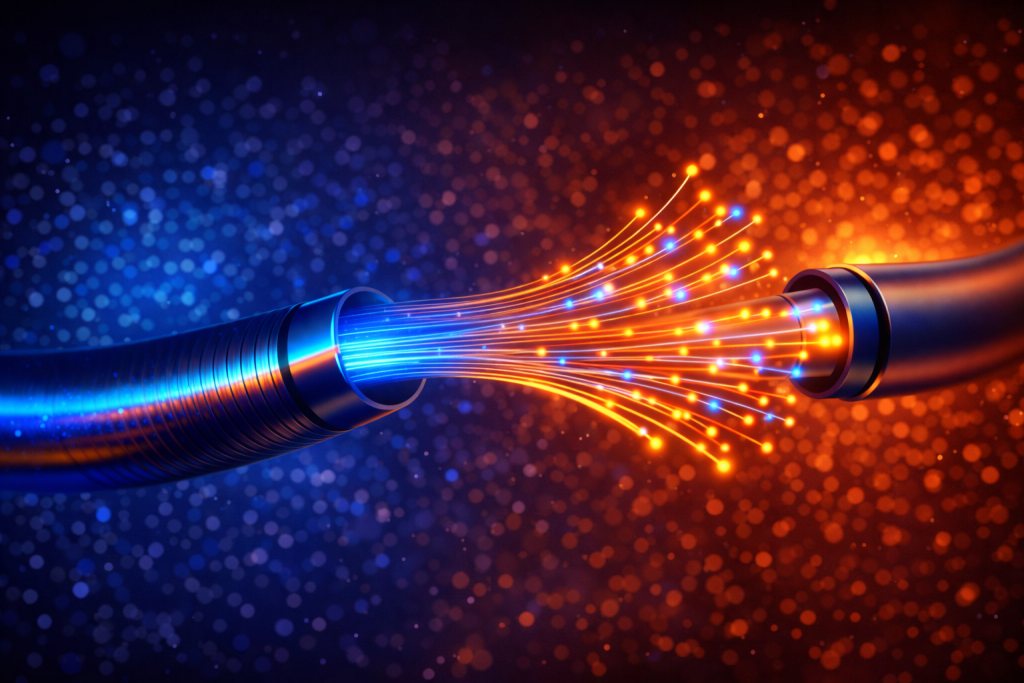
Fiber internet uses fiber-optic cables made from very thin strands of glass or plastic. These strands are thinner than a human hair and are designed to carry data in the form of light signals.
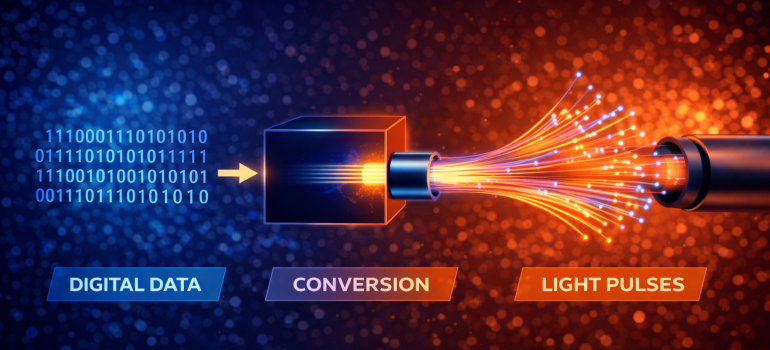
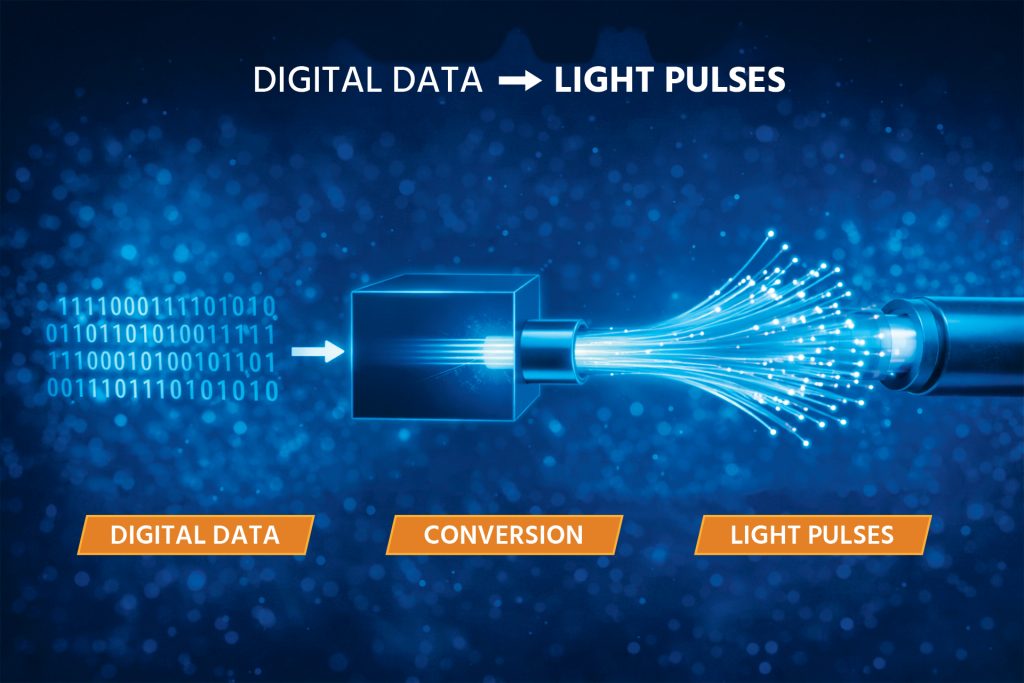
Instead of sending electrical pulses like traditional broadband, fiber converts digital data into light pulses. These pulses travel through the cable at nearly the speed of light.
This is the main reason fiber internet is much faster than copper-based internet connections.
Step 1: Data Is Converted Into Light
When you click a website or stream a video, your device sends a request to your Internet Service Provider (ISP).
Here’s what happens:
- Your request is converted into digital data.
- That data is turned into light signals using a laser or LED.
- The light pulses travel through the fiber-optic cable.
Because light moves extremely fast and faces very little resistance, the data reaches its destination almost instantly.
Step 2: Light Travels Through the Fiber Cable
Fiber cables contain a core and cladding:
- The core carries the light signal.
- The cladding reflects the light inward, keeping it moving forward.
This reflection process is called total internal reflection. It allows the light to travel long distances without losing much strength.
Unlike copper cables, fiber cables:
- Do not suffer from electromagnetic interference
- Are less affected by weather
- Maintain signal quality over long distances
This ensures stable and consistent internet performance.
Step 3: Light Is Converted Back Into Data
Once the light signal reaches your home or business:
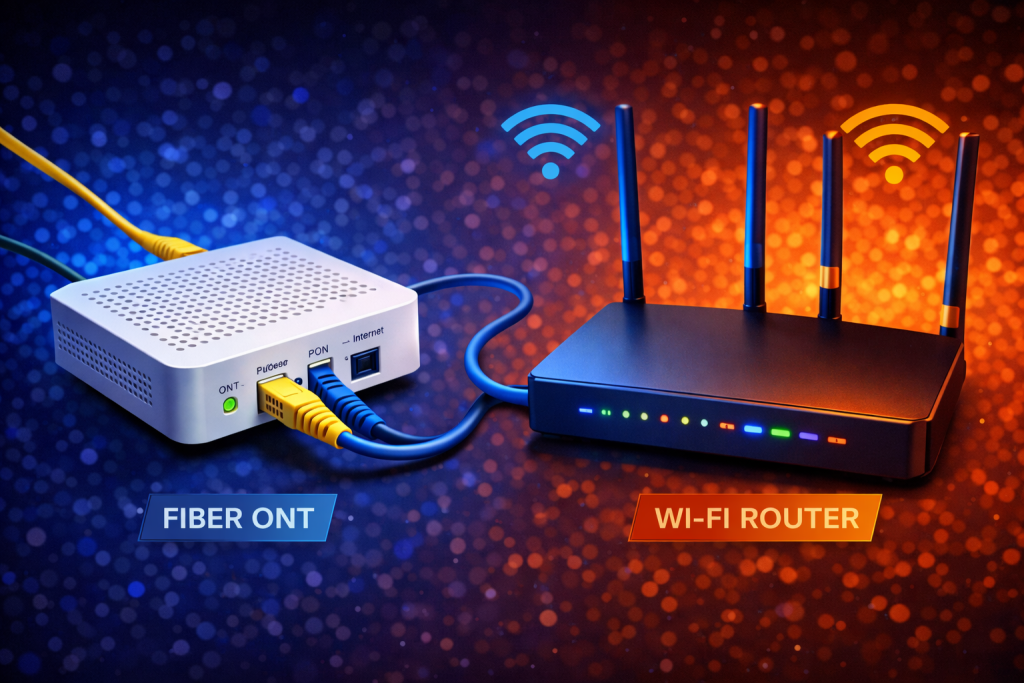
- An Optical Network Terminal (ONT) receives the signal.
- The ONT converts light back into electrical signals.
- Your router distributes the internet to your devices.
This process happens in milliseconds, allowing seamless browsing, streaming, and gaming.
Why Fiber Is Faster Than Broadband
Traditional broadband uses copper wires and electrical signals. These signals slow down over distance and are vulnerable to interference.
Fiber internet uses light instead of electricity, which provides:
- Higher bandwidth capacity
- Lower latency
- Symmetrical upload and download speeds
- Minimal signal loss
This makes fiber ideal for:
- 4K and 8K streaming
- Cloud computing
- Remote work
- Online gaming
- Large file uploads
Types of Fiber Connections
There are different types of fiber deployment:
1. FTTH (Fiber to the Home)
Fiber cable runs directly to your home. This provides the fastest and most reliable connection.
2. FTTB (Fiber to the Building)
Fiber runs to the building, then copper wiring distributes it inside.
3. FTTC (Fiber to the Curb)
Fiber reaches near your home, but the last part uses copper cables.
FTTH offers the best performance because it avoids copper wiring completely.
Fiber Internet and Latency
Latency refers to how quickly data travels between two points.
Fiber internet has very low latency because:
- Light travels faster than electricity
- There is less signal interference
- Data packets experience minimal delay
Low latency is essential for:
- Online gaming
- Video conferencing
- Live streaming
- Financial transactions
Is Fiber Internet Future-Proof?
Yes. Fiber technology is built for the future.
As internet demand increases due to:
- Smart home devices
- IoT technology
- Cloud-based systems
- AI applications
Fiber networks can handle much higher bandwidth than traditional broadband systems.
This makes fiber a long-term investment for both homes and businesses.


sam online best isp in the dhaka city i need a connection
please share your phone number