
Introduction
Choosing the right internet connection is one of the most important decisions for both homes and businesses. With increasing demand for high-speed streaming, online gaming, video conferencing, and cloud-based work, users often compare fiber vs broadband to determine which option is better. While both provide internet access, they differ significantly in speed, reliability, and performance.
Understanding these differences will help you make an informed decision based on your needs, budget, and long-term expectations.
What Is Fiber Internet?
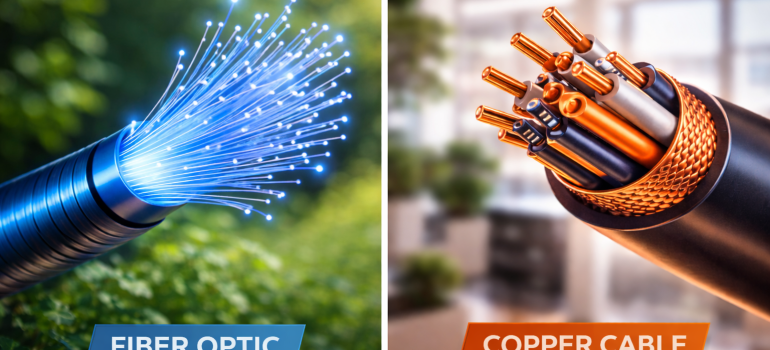
Fiber internet uses fiber-optic cables made of glass or plastic to transmit data as light signals. Because light travels extremely fast and with minimal interference, fiber connections provide:
- Ultra-high speed
- Low latency
- Stable performance
- Symmetrical upload & download speeds
Fiber technology is considered the most advanced form of internet connectivity available today.
What Is Broadband?
Broadband is a general term that refers to high-speed internet connections such as:
- DSL (Digital Subscriber Line)
- Cable Internet
- Fixed Wireless
Most traditional broadband connections use copper cables and electrical signals to transmit data. While broadband is widely available and affordable, it typically offers lower performance compared to fiber.
1. Speed Comparison
Speed is one of the biggest differences between fiber and broadband.
Fiber Speed:
- 100 Mbps to 1 Gbps (or higher)
- Consistent speed even during peak hours
Broadband Speed:
- 10 Mbps to 200 Mbps (varies by location)
- Speed often drops during high traffic periods
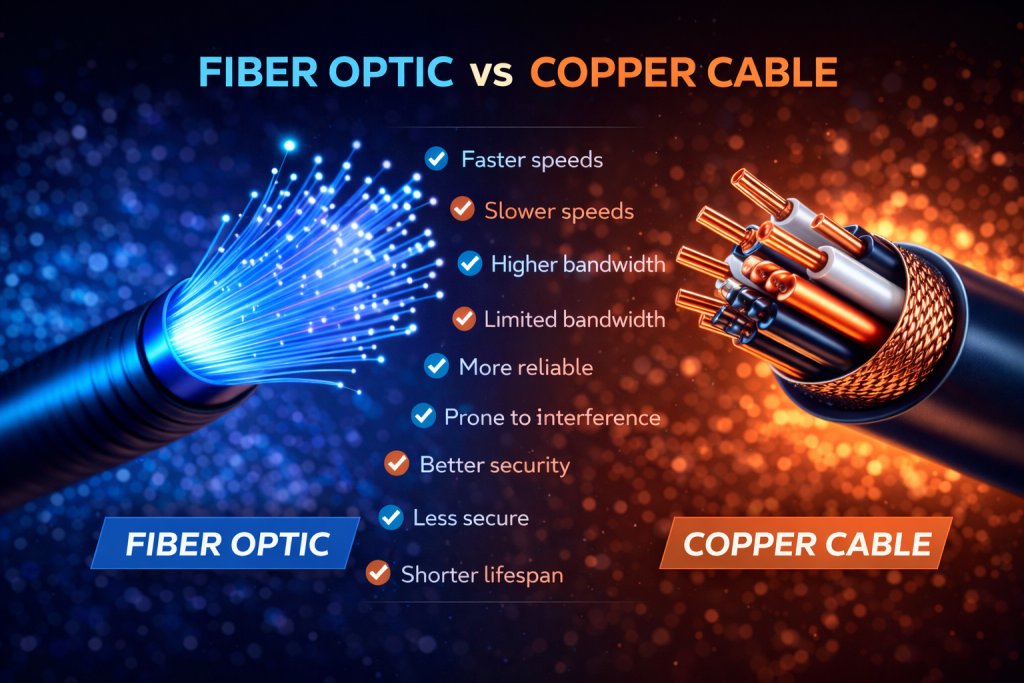
Fiber clearly provides faster and more stable internet speeds, especially for heavy users.
2. Upload vs Download Speed
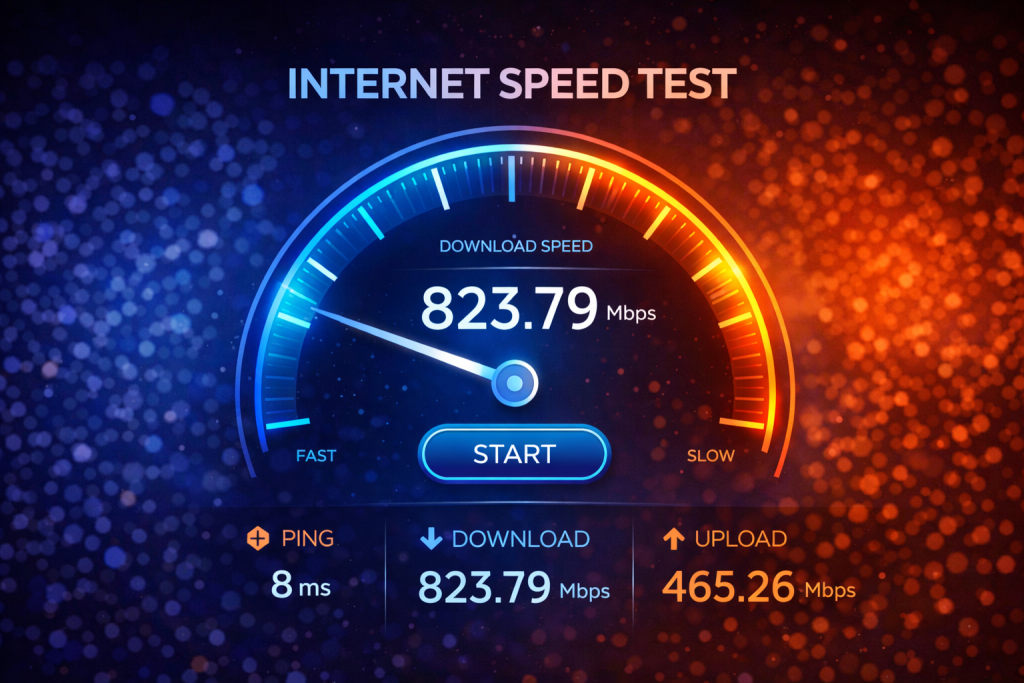
Most broadband plans offer high download speeds but much slower upload speeds.
Fiber internet typically offers symmetrical speeds, meaning:
Download speed ≈ Upload speed
This is extremely beneficial for:
- Video conferencing
- Uploading large files
- YouTube creators
- Remote workers
If you regularly upload content, fiber is the better choice.
3. Latency and Performance
Latency refers to the delay between sending and receiving data.
Fiber internet has very low latency because light signals travel faster and more efficiently than electrical signals. This makes fiber ideal for:
- Online gaming
- Live streaming
- VoIP calls
- Real-time financial trading
Broadband connections generally have higher latency, which may cause lag in competitive gaming or video calls.

4. Reliability and Stability
Fiber cables are less sensitive to:
- Weather conditions
- Electrical interference
- Network congestion
Copper-based broadband connections are more likely to experience signal degradation, especially during bad weather or peak usage times.
For businesses and remote workers, reliability is crucial — and fiber delivers better stability.
5. Coverage and Availability
Broadband is more widely available, especially in rural areas. Fiber infrastructure is still expanding and may not be accessible everywhere.
If fiber is available in your area, it is generally the superior choice. However, broadband remains a practical solution where fiber coverage is limited.
6. Cost Comparison
Broadband plans are usually cheaper than fiber plans.
However, fiber offers:
- Higher performance
- Long-term scalability
- Better value for heavy internet users
For basic browsing and social media, broadband may be sufficient. For streaming, gaming, or business use, fiber is worth the investment.
7. Future-Proof Technology
Fiber networks support significantly higher bandwidth capacity than copper networks. As digital demands increase — including smart homes, IoT devices, and cloud computing — fiber is better prepared for the future.
Broadband technology has limitations that may require upgrades over time.
Which One Should You Choose?
Choose Fiber Internet if you:
- Stream 4K content regularly
- Play competitive online games
- Work from home
- Run a business
- Need fast upload speeds
Choose Broadband if you:
- Have light internet usage
- Mainly browse and use social media
- Want a lower-cost option
- Do not have fiber available


